


Why does a walk in the woods help you clear your head?

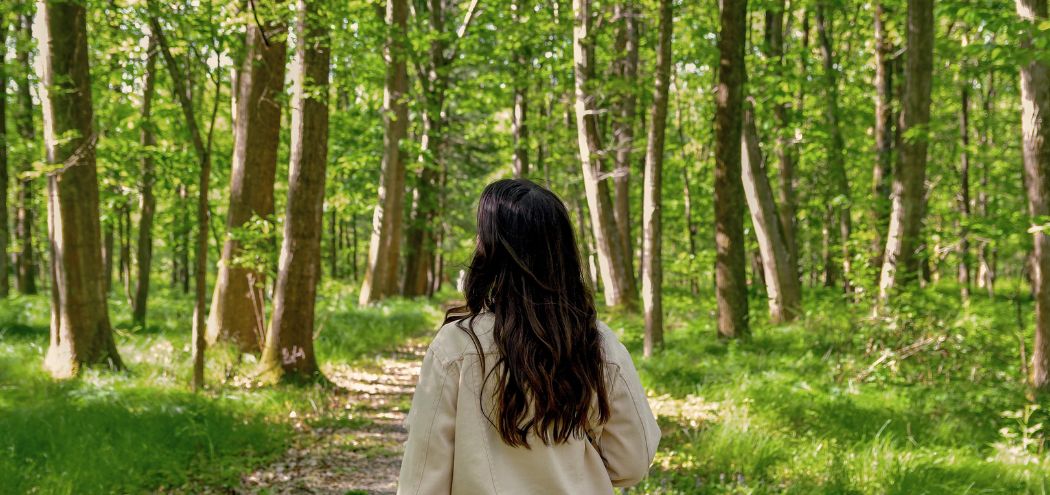
Imagine how you feel walking in the woods with sunlight streaming through the branches, the smell of the earth after rain, a gentle breeze on your face. As you spend more time in the woods, something happens in your body and mind: your shoulders relax, your breathing becomes deeper, mind stops chasing itself and simply drifts from one sensory experience to the next. Whatever you were carrying all week might fade away, at least for a while.
Most of us have felt this change, but why does it happen?
What happens with the mind when we are in the woods
In 1989, the psychologists Rachel and Stephen Kaplan proposed a theory that has since become one of the most useful ideas in environmental psychology. They called it Attention Restoration Theory.
Their argument goes like this. There are two kinds of attention we use every day. The first is directed attention; the effortful kind. It is what we use to focus on a spreadsheet, follow a complicated conversation, filter out distractions, and hold something important in mind. It is essential, and it is finite. Every hour we spend on directed attention drains a limited reserve. By the end of a modern workday, most of us feel tired and drained.
The second is involuntary attention. This is the soft, effortless kind of noticing that happens without us trying, when our attention is caught by a lightly swaying tree branch, or dappled light on water, or the slow drifting of clouds. The Kaplans called this soft fascination — when the mind is engaged without effort and notices things without being intentionally directed.
Here is the key insight. Nature is unusually rich in soft fascination. A forest offers the mind an endless supply of subtle, interesting things to notice and none of them demand anything back. And while the mind is softly fascinated, directed attention gets to rest and recharge. Research has shown that a fifty-minute walk in nature significantly restores directed attention, while a fifty-minute walk in an urban environment does not. “Urban environments are filled with stimulation that captures attention dramatically and additionally requires directed attention (e.g., to avoid being hit by a car), making them less restorative.” (2) In the natural environment, our attention can rest, and the effect can last for days afterward.

This is why we come out of the woods feeling clearer. It is not just about fresh air or exercise; it’s that the depleted part of our mind finally gets a chance to recover.
The more opportunities we give our minds to wonder while we spend time in natural environments, the better we handle everything else that comes our way.
Attention restoration is one specific piece of a larger puzzle. Next week, we will talk about a bigger picture that explains why we feel better and heal faster in the natural environments and what yoga has to do with it — tune in!
References
- Rachel Kaplan and Stephen Kaplan, The Experience of Nature: A Psychological Perspective (Cambridge University Press, 1989)
- Marc G. Berman, John Jonides, and Stephen Kaplan, “The cognitive benefits of interacting with nature,” Psychological Science (2008)