

From stiff to supple: The power of joint mobilization


Every joint in your body has a range of motion, meaning it can move a certain distance in specific directions. Having a full range of motion means you can move each joint freely through its entire span of movement.
In your early years, you naturally enjoy a full range of motion in all your joints. But as you grow older, most daily activities, sports, and even common exercise routines only use a fraction of what your joints are capable of. On any given day, we rarely move through our complete range of motion. Over time, joints that don’t get used fully begin to lose their mobility, and you start to feel stiffer and more restricted in your movements.
Your body also tends to adapt to the positions you hold most often. If you sit for long periods, for example, your hips become accustomed to that 90-degree flexed position and may resist efforts to fully extend. This is why it’s essential to mobilize all the major joints in your body regularly to maintain access to your full range of motion.
Joint mobilization is different from strength training or stretching. It involves rhythmically moving your joints back and forth through their full range to:
- Increase circulation to surrounding tissues
- Loosen areas that have become stiff or “stuck”
- Pump synovial fluid to keep joints lubricated
- Reinforce healthier, more natural movement patterns
Regular joint mobilization also trains your nervous system. It sends signals to your brain that these ranges of motion are safe to access. As a result, your body becomes more confident moving freely, rather than tensing up or limiting motion when you try something new, like taking up pickleball or dancing again after years away.
This becomes even more important as we get older. The natural process of aging, coupled with years of repetitive positions and limited movement, can make joints stiffer and less responsive. As we age, the quality and quantity of synovial fluid (the thick, gel-like liquid that lubricates our joints) tend to decline. The cells that produce this fluid become less active, and the fluid itself can become thinner and less effective at reducing friction between joint surfaces. Without adequate lubrication, movements feel “dry” or creaky, and cartilage is exposed to more wear and tear. Regular movement helps counteract this process by stimulating synovial fluid production and keeping it circulating through the joint capsule, delivering vital nutrients to the cartilage, which has no direct blood supply of its own.

Aging also affects the joint structures themselves. Cartilage may gradually lose elasticity and hydration, making it more vulnerable to damage. The surrounding ligaments and tendons can stiffen as collagen fibers become less supple, and muscle strength often declines, offering less support and stability to the joints.
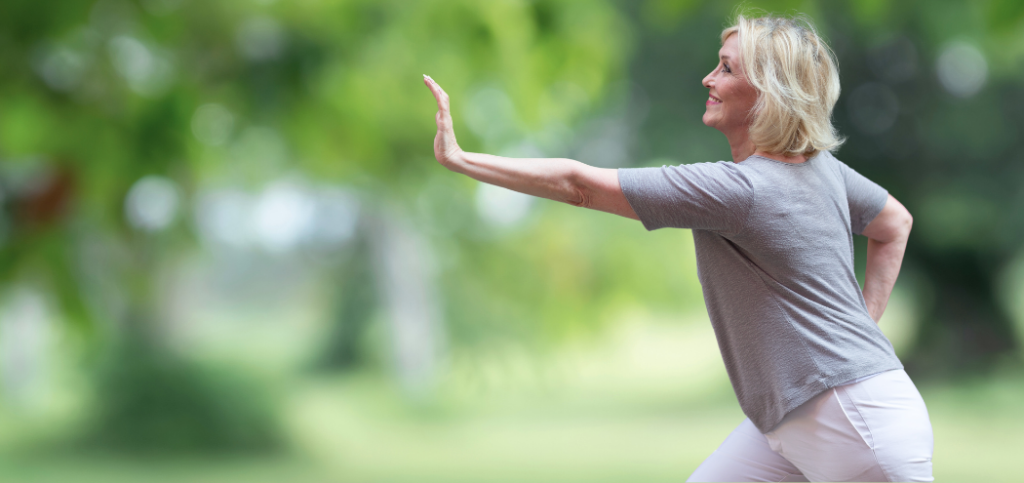
These changes don’t have to mean inevitable pain or restriction, though. Joint mobility can be regained. Consistent, gentle joint mobilization can restore the range of motion in your joints, improve posture, reduce discomfort, and help you move through life with greater ease and confidence for decades to come.
One of the simplest ways to test your joint mobility is to see whether you can get down to the floor and back up again, and how many points of contact you have with the ground as you do it. This simple movement reveals a lot about the flexibility, strength, and coordination of your hips, knees, and core. Next time, we’ll cover three different ways to transition up and down safely, so you can test yourself and discover which method works best for your body. Tune in and see where you stand!