
Train for the life you want: Why functional strength matters


“Only brush the teeth you want to keep.” That bit of dental wisdom has a powerful parallel in the world of movement.
Take a moment and ask yourself: What do you still want to be able to do in 15-20 years and beyond?
Do you want to be able to walk uphill without getting winded? Lift your grandchild with confidence? Get up from a low couch or toilet seat without needing to brace yourself? Carry heavy grocery bags, move comfortably through a busy airport, or navigate the uneven cobblestone streets of a charming European town?

These are not extreme fitness goals. They’re everyday activities that define independence, freedom, and enjoyment of life. And preserving them starts with an exercise approach that prioritizes function over looks. That’s where functional training comes in.
Functional training focuses on movements that mirror real-life actions, helping you stay capable and confident in your body as you age. It’s less about building muscle definition and more about making sure your body can handle the physical demands of daily living with ease now and in the decades to come.
Here are the types of activities that can be included in functional training:
- Movements that imitate daily living
Functional training includes activities that mimic the way you move in everyday life. Walking, reaching, bending, side-stepping, picking something off the floor, or putting on socks while standing on one foot are all examples of movements that can be trained and improved with consistency. When you practice these patterns in a safe, intentional way, your body becomes more stable, more mobile, and more efficient.
2. Movements that build strength for daily living
Some exercises may not look exactly like day-to-day tasks, but they directly support them. For example, doing squats helps you get up and down from chairs or pick things up from low shelves with less effort. Practicing lateral (side-to-side) squats helps maintain stride length and walking stability. Pushups build the upper body strength needed to push yourself off the ground or out of a deep seat, and shoulder presses make lifting luggage into overhead compartments or reaching high cabinets much easier.
3. Movements that balance out your current lifestyle
Many of us spend a lot of time sitting at desks, in cars, or on couches, which can create imbalances in the body over time. Functional exercises can help correct this by strengthening the muscles that tend to get neglected. For example, focusing on the posterior chain (the muscles along the back of the body, like the glutes, hamstrings, and back) helps improve posture and counteracts the slouched-forward position that comes from too much sitting. Incorporating hip mobility work and core stabilization also restores your body’s ability to move and support itself well.
4. Movements that prepare you for new sports or hobbies
If you plan to try a new activity later in life, like hiking, golfing, table tennis, or the wildly popular pickleball, your body needs a solid foundation to handle those demands. Many injuries happen when people jump into a new activity without building the strength, stability, or coordination needed for it. Fast, explosive, or multidirectional movements can catch the body off guard if it’s not prepared. Functional training gives you the foundation to enjoy those hobbies injury-free.

A Smart Approach to Functional Strength

To get the most out of your training, there are a few key principles to keep in mind.
First, good form is everything. When you’re starting out, it’s worth learning the basics under the guidance of a qualified professional. Moving incorrectly or compensating with the wrong muscles can cause more harm than good in the long run.
Second, take your time with building intensity. Many people dive into bootcamp-style workouts thinking it’s the quickest path to results, but they often end up sore, discouraged, or even injured. Progress gradually so your body can adapt and recover well.
Third, use an appropriate load. You can start with just your body weight and slowly add resistance or small weights over time to build strength safely. You don’t need to lift heavy to get stronger; you just need to be consistent and intentional.
Finally, prioritize compound movements. Our daily activities require the recruitment of various muscle groups at the same time. Focus on exercises that engage multiple muscle groups in coordinated patterns. Planks are excellent for total-body strength and stability. Movements that combine a squat with an overhead press, or a wide-legged squat with a forward arms swing, train the body as an integrated system. These types of movements are far more effective for long-term mobility and strength than isolated muscle exercises.
The bottom line is that we need to train for the life we want to live. Functional strength isn’t just about fitness; it’s about your future. It’s about continuing to do the things you love without limitation or fear. It’s about having the physical freedom to travel, to play, to carry your own groceries, or to simply get up off the floor. Whatever your age or current fitness level, it’s never too late or too early to start training for the life you want.

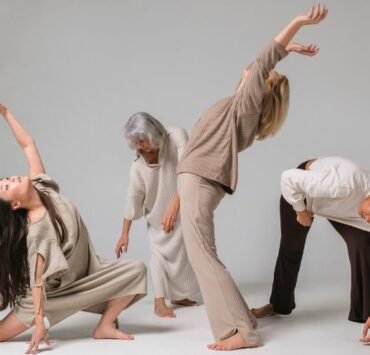
Try this short yoga practice to build your functional strength. The five familiar yoga moves in this routine are simple but powerful; they are essential for maintaining a strong, stable body and a focused mind at any age.


Good article